



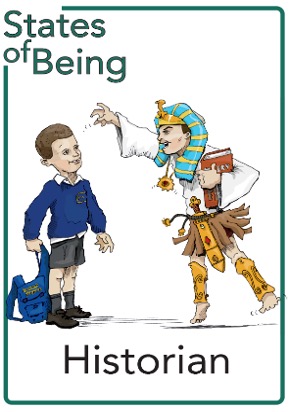
Historian

Being a Historian at Filton Avenue

Keeping History local

We believe that the best way to learn about history is through initially keeping it local so that it is more relatable, more tangible and more memorable. Once children have an understanding of their local area and how it has changed over time, this can then be expanded to the wider world. Doing this also enables learners to embody the role of historians, as they have more sources at their fingertips when uncovering what happened in the past.

How were lives changed forever in World War One?

When children learn about World War One, they are often considering soldiers in a more abstract sense and are learning about battles that occurred far away from home, in a place they most likely haven’t been. When our learners carry out their World War One enquiry they focus on the Whiteford brothers who lived in St George, Bristol. One brother was a conscientious objector, one a solider and one drove ambulances. They can consider how far the brother had to travel to fight and consider how Bristolians’ lives changed as a result of the Great War. 

Who is trading with whom?

In this enquiry, learners consider trade, within the context of Bristol. Who did Bristol trade with? How did trade change over time? What was the sugar trade? Children visit the Bristol Underfall yard and harbour to contextualise it further.

Implementation

What does being a lead Historian entail?

Provide encouragement and ideas to staff across the school. Know when Historian enquiries are happening and speak with the relevant year groups.

Ensure visits and experiences are carried out and provide support regarding this.

Monitor content, progression and enquiries and be mindful of coverage ‘v’ skill acquisition.

Support with the development of skills and knowledge progressions.

Lead staff training sessions.

Drive the development of being a Historian, sharing best practice.

Evaluate being a Historian and complete a Deep Dive analysis.

Ensure enquiry planning and floor books (or alternative evidence) are sufficient to effectively represent the state of being you lead.

Lead a group of children to be “Champions” for the subject and use this group to gather different voices across the school.

With the State of Being Champions, create an annual newsletter for your state of being, which is sent to families and shared on our website and other social media channels. This should celebrate learning, create aspiration and centre children in current affairs for that state of being.

Working closely with these Champions, have a strong focus on developing pupil voice, ensuring our pupils know their thoughts are valued and providing evidence of the positive impact of our curriculum.

Lead being a Historian in line with the school improvement plan and curriculum action plan so that you are sensitive to, and understand how, whole school improvement has to be considered strategically in order to have the best effect and not overwhelm staff.

What is ‘covered’?

Essentially, a Curious-city curriculum uses the National Curriculum 2014 areas as a basic foundation of entitlement. However Curious-city is much more than that. It is localised, real-life and challenges learners to apply their learning in unique ways without the support of adults to prove what they have learnt. Local companies, charities, organisations, individuals and objects are used as foci to enhance and instill a sense of curiosity, pride and stewardship.

Impact

How is Being a Historian monitored and assessed?

Every term, Being Champions meet as a team (the Enquiry hub) to discuss and share what they are seeing and hearing and, working as a team, help to review the school’s curriculum and contribute to the Enquiry action plan. Twice a year, Being Champions work with the Enquiry leads to review floor books and enquiry books to ensure coverage and progress across the school for their state of being.

As there is no requirement to formally report attainment of History, Being a Historian is assessed through monitoring how a learner responds to enquiries and whether they show a particular enthusiasm and disposition towards it, or, if they constantly needed support in order to access it. This information is recorded on the Enquiry crib sheets which are kept and used for report writing towards the end of the year. These are then passed on to the next teacher to use to support future learning.

National Curriculum coverage linked to our enquiries

If you want to be a Historian at home, try looking at these websites: